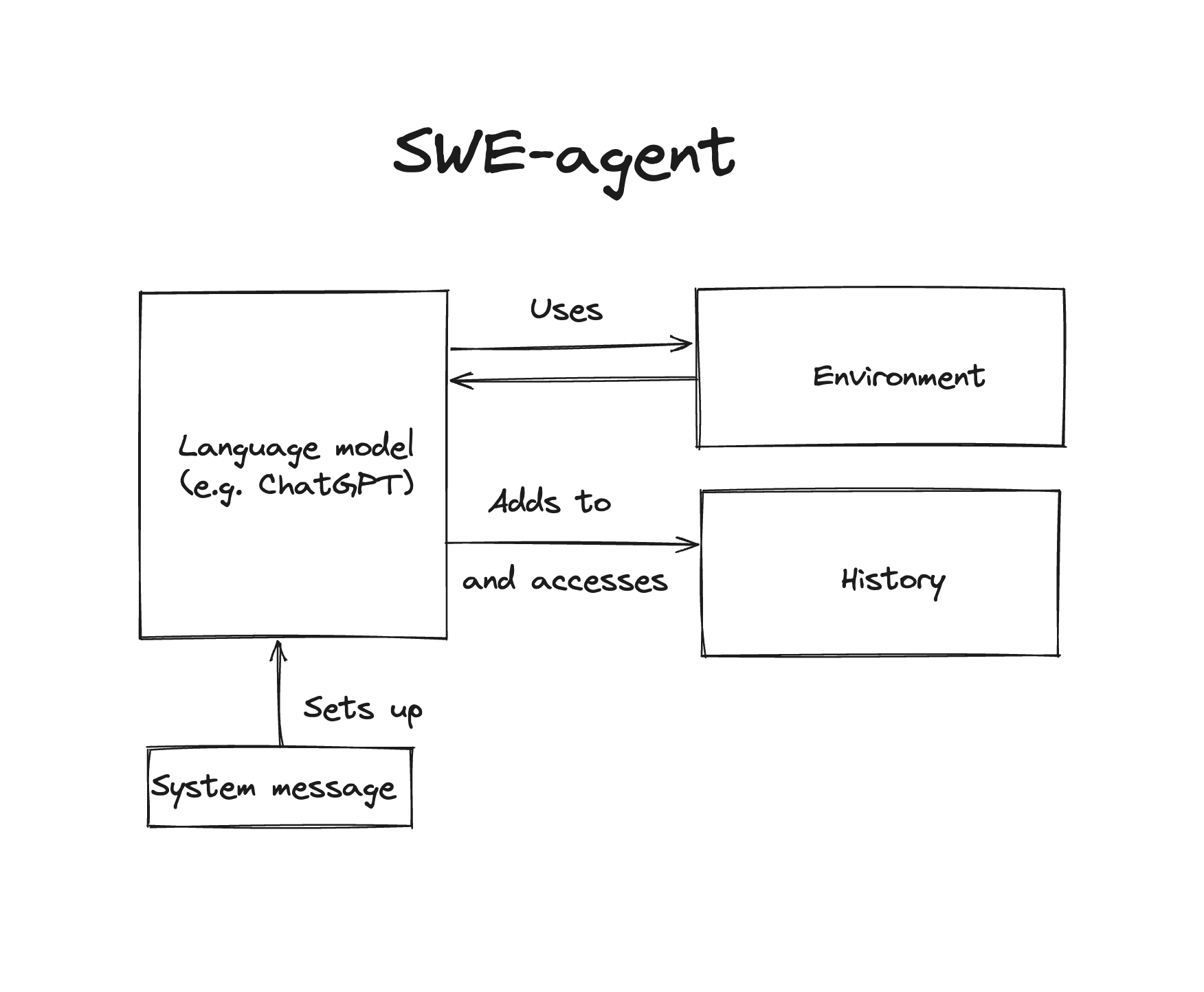
CS146s学习笔记 week 1-2
Week 1
LLMs (large language models) are autoregressive models for next-token prediction.
In practice, strengths and limitations both exist.
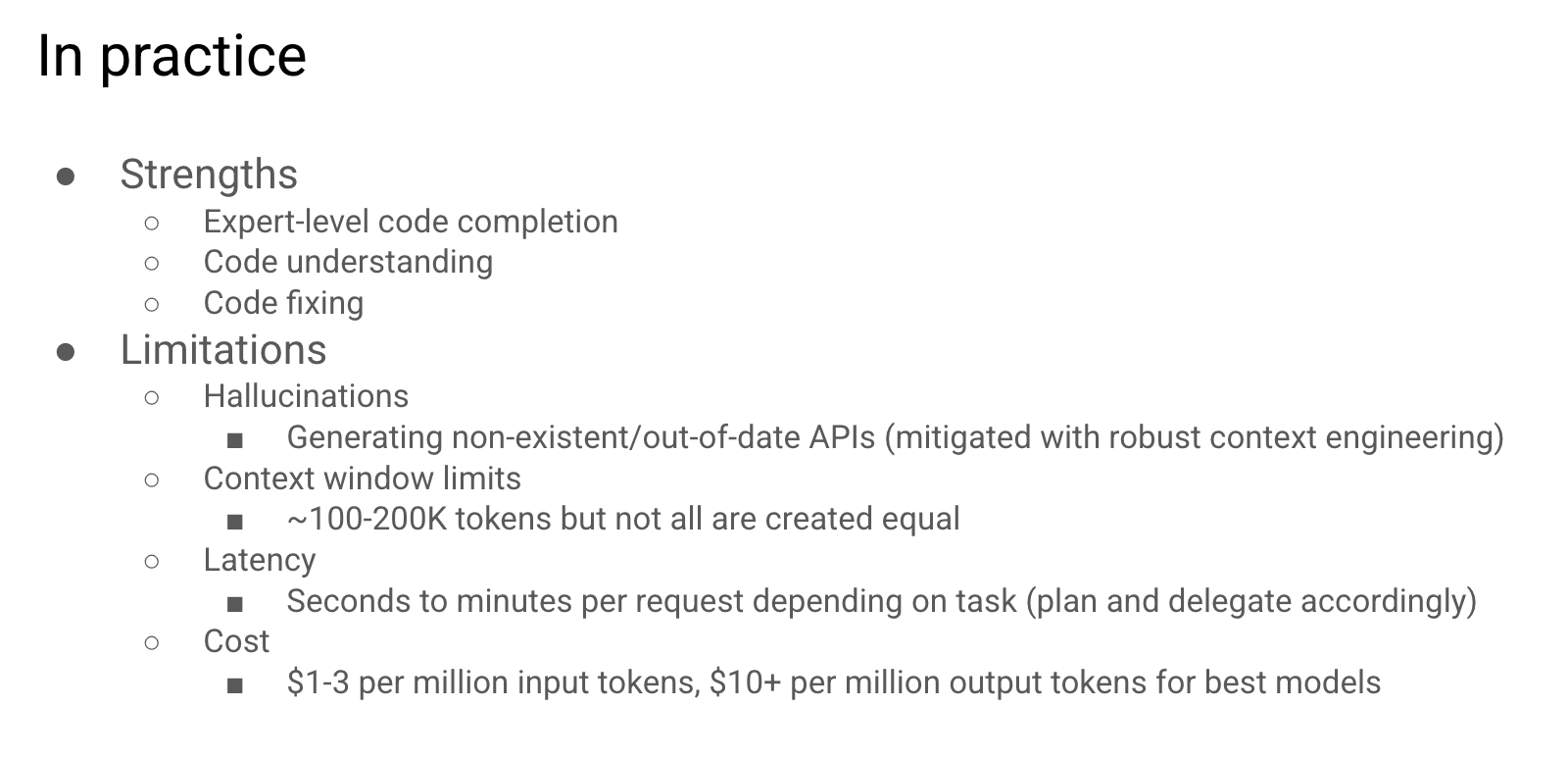
To make full use of LLMs, we need to design powerful prompts and follow some best practices.
Below is the best practices how Openai uses Codex.
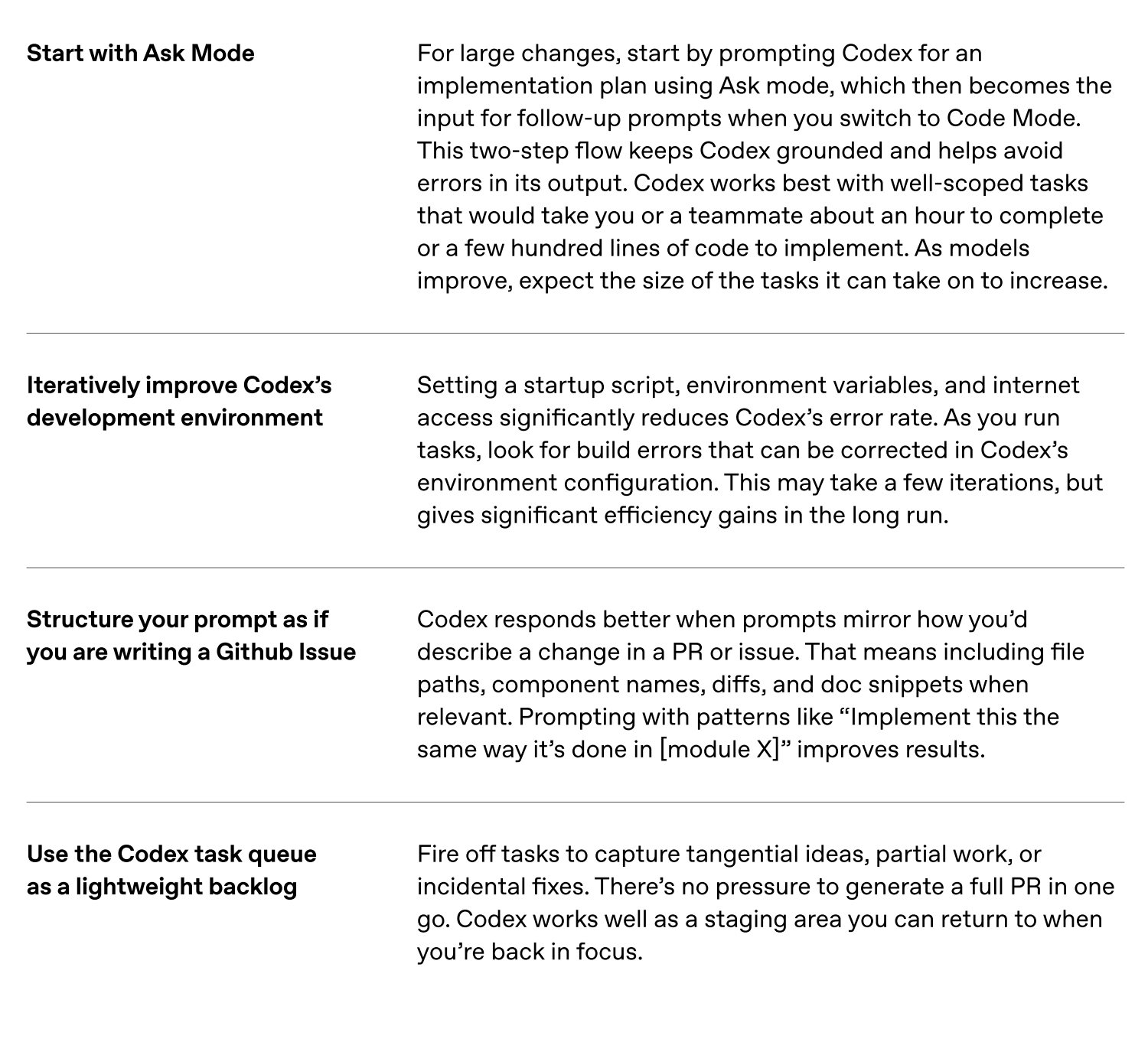
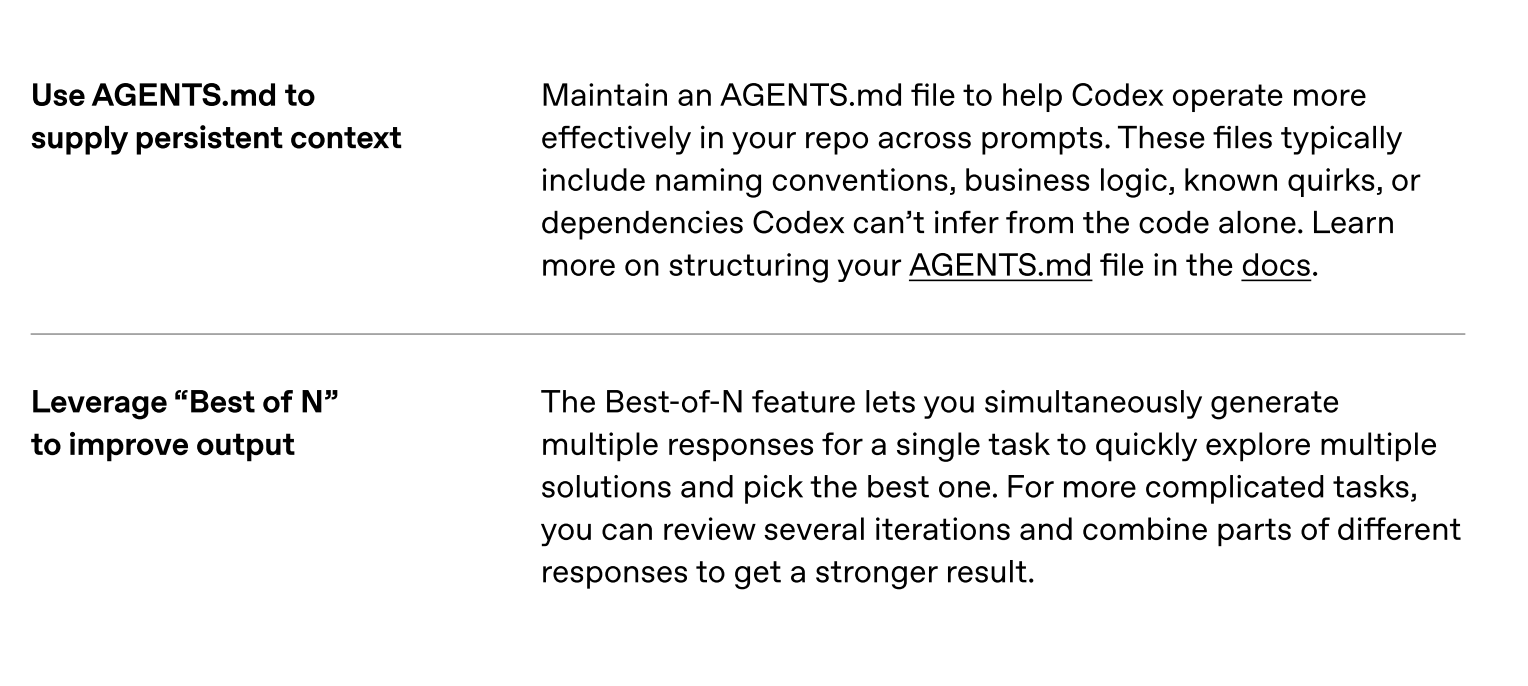
To make full use of LLMs, we need to design powerful prompts and follow some best practices.
Various kinds of Prompts
| Prompt Type | Description | Example |
|---|---|---|
| Zero-shot | Asking without examples. | "Tell me a joke." |
| Few-shot (K-shot) | Providing examples to guide output. | "Sun->Hot, Ice->Cold, Fire->?" |
| Chain-of-Thought (CoT) | "Thinking step-by-step" for complex problems. | "Q: 10+5-2? A: 10+5=15... Ans: 13." |
| Self-Consistency | Majority vote from multiple reasoning paths. | Output: [42, 42, 40] -> Final: 42 |
| Tool Use | Using external tools (APIs/Calculators). | "Weather?" -> calls get_weather() |
| RAG | Fetching external data for context. | Question + [Company Handbook] -> Answer |
| Reflexion | Self-correction after mistakes. | Code fails -> "I missed var" -> Rewrite |
Prompt Architecture
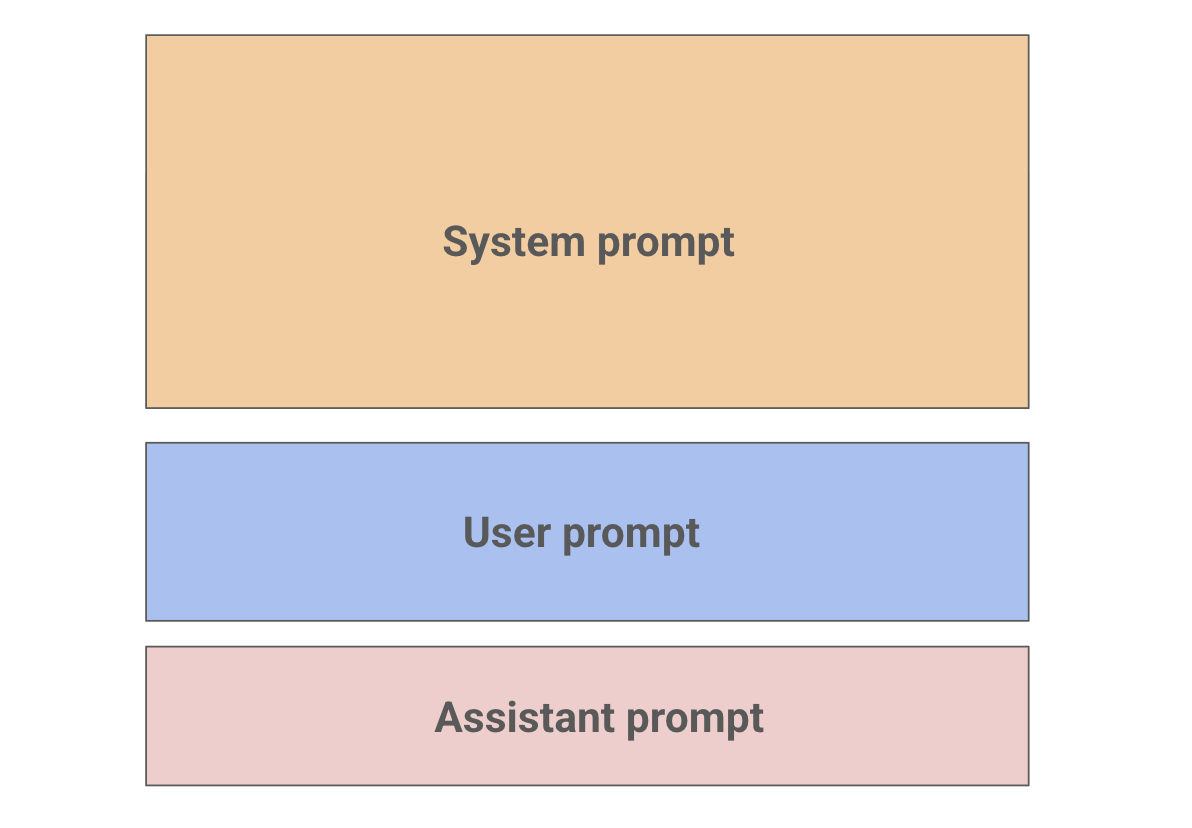 How these prompts all stack together?
- Sys prompt usually not seen
- User prompt usually where you provide your ask
- Assistant prompt where the LLM responds
Best Practices for Prompting
-
Prompt Improvement Anthropic Prompt Improver
-
Clear Prompting Give the prompt to someone with minimal context. If they are confused, the LLM will be too.
-
Role Prompting Use role prompting aggressively to make system prompts more powerful.
Week2
MCP
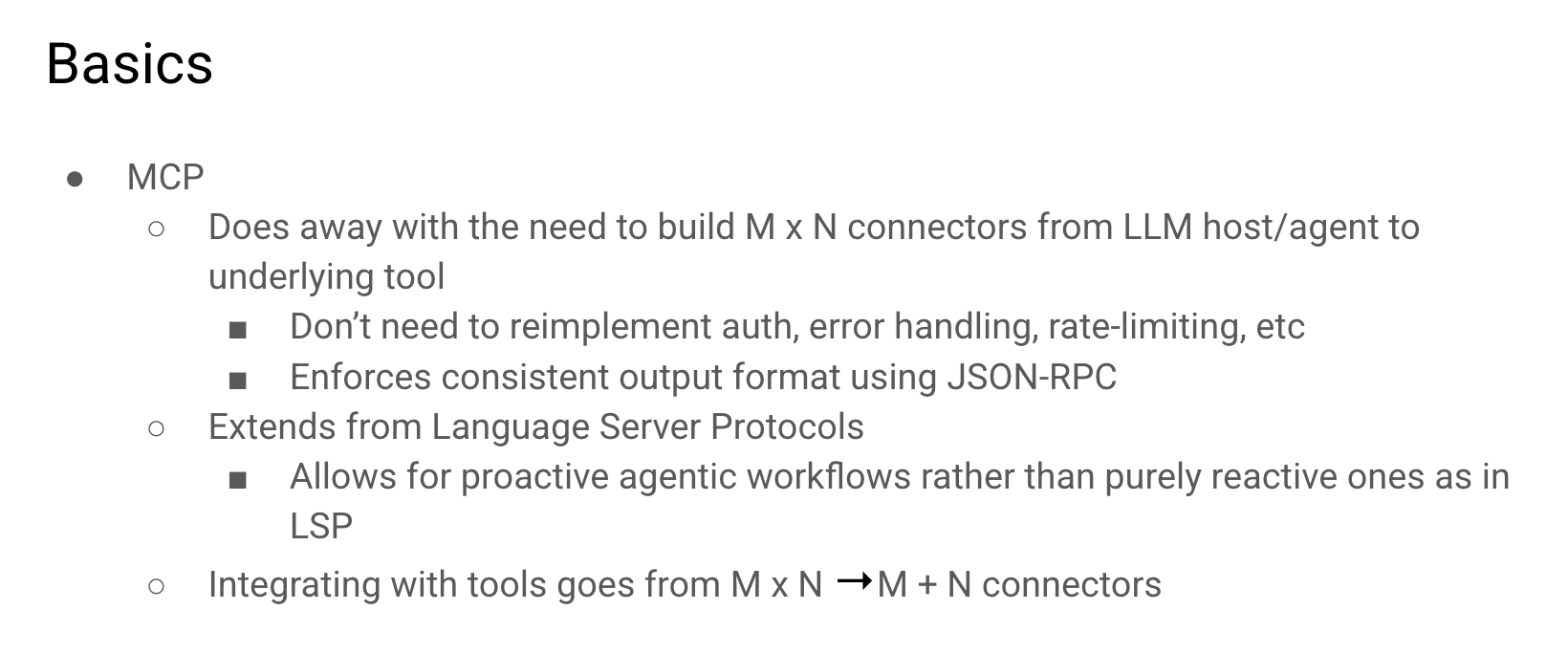
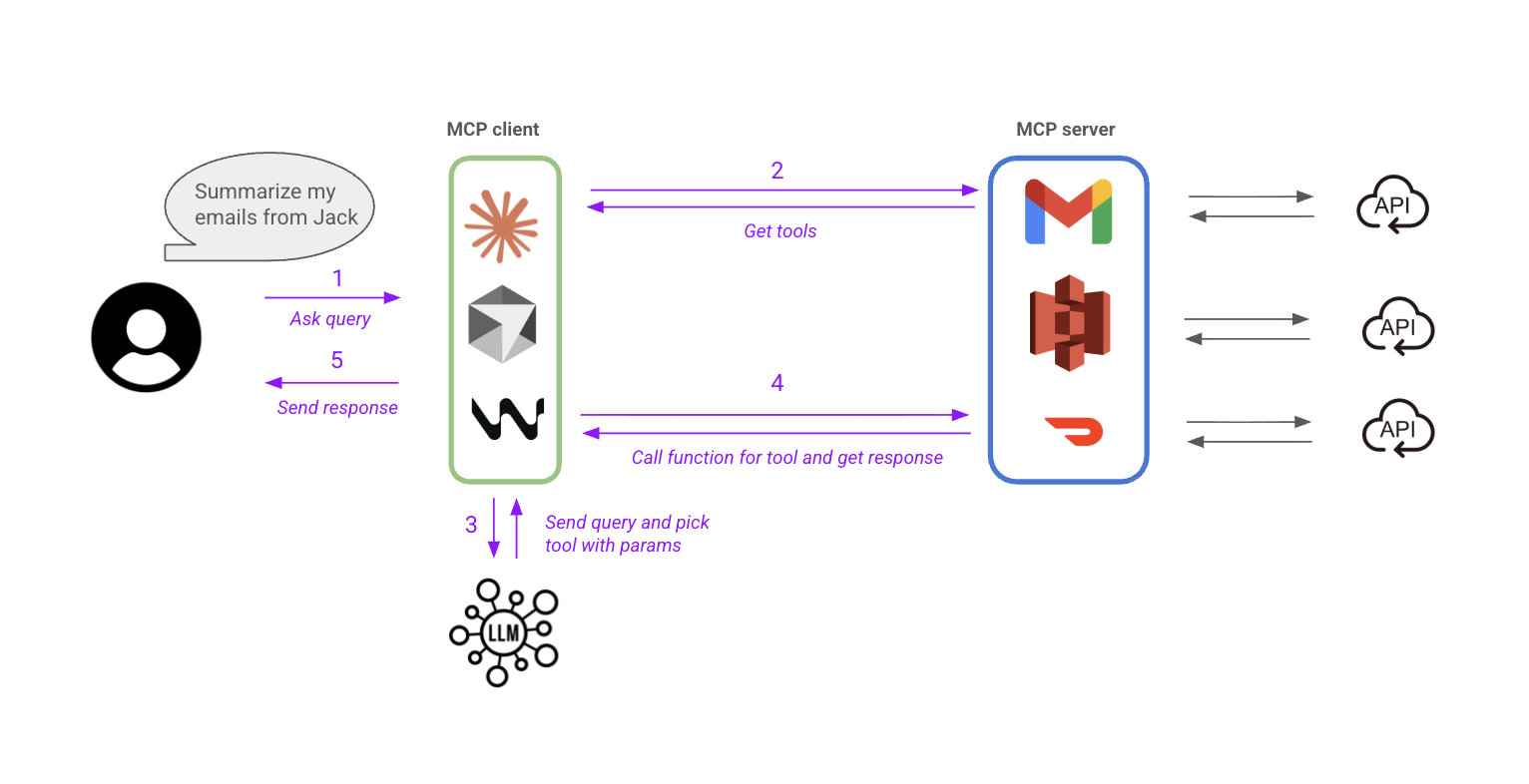
def:MCP is essentially a universal adapter between AI applications and external tools or data sources.
 Below is the flow of MCP application
apis don't make mcp tools
In software engineering, restful apis are widely used, but they may not be suitable for LLMs.
核心挑战 (Core Challenges)
- Tool Explosion: Large APIs have hundreds of endpoints. Mapping each to a tool exceeds model limits (e.g., Claude's 128-tool limit) and wastes the Context Window.
- Token Inefficiency: JSON responses are verbose. Returning "all fields" via API forces the model to process redundant data (brackets, keys, unused fields), increasing latency and cost.
- Abstraction Mismatch: APIs are rigid (e.g.,
get_user_by_id). Models work better with flexible, intent-based tools that handle fuzzy logic.
解决方案 (Proposed Solutions)
- Aggregated Tools: Combine multiple endpoints into a single, powerful MCP tool.
- Data Thinning: Pre-filter data on the server. Convert JSON to CSV or Markdown to save tokens.
- Agent-Centric Design: Write tool descriptions like prompts. Guide the model on how and why to use the tool rather than just describing the technical interface.
Coding Agent
Core steps of a Minimum Viable Workflow (MVW):
- Read in terminal and keep appending to conversation: Read user input in the terminal and continuously append it to the conversation history to maintain context.
- Tell LLM what tools are available: Declare the available toolset to the LLM (Tool Definition).
- LLM asks for tool use at appropriate time: The LLM requests tool execution at the right moment based on task requirements (Tool Call).
- Execute tool offline and return response: Execute the specific tool logic locally or offline and return the execution results to the LLM.
Minimum Toolset:
Read_file: Read specific file content.List_dir: Explore directory structure to understand project layout.Edit_file: Core productivity tool for creating new files or editing existing ones.